Respite and Alternative Provision in Essex and Thurrock
When families are looking for specialist support, understanding how it can be funded is often as confusing as finding the right provision. Some families pay directly for sessions. Others receive support arranged and funded by a local authority or school. The route depends on the service, the child’s circumstances and who has responsibility for arranging it.
At ABA Pathways, we work with families and professionals to identify individual needs and develop support that is meaningful, safe and person-centred. Here, we explain the main funding routes for respite and alternative education provision (AP), without assuming that every child will follow the same pathway.
What is the difference between private funding and commissioned support?
Privately funded support means a parent or carer arranges and pays for a service directly. Commissioned support means a school or public body agrees to arrange and fund an identified package, subject to its assessment, decision-making and approval processes.
A family may contact a provider to discuss whether support is suitable, but that conversation alone does not mean funding has been approved.
It is important to establish who is commissioning the sessions, what has been authorised and when the arrangement can begin.
How can specialist respite be funded?
Respite, sometimes called short breaks, gives children opportunities for enjoyable activities, relationships and experiences while providing families with a break from caring responsibilities. It is not intended to turn leisure time into another teaching programme.
Some families choose to privately fund respite, subject to the provider’s capacity and assessment of the child’s support needs. This can allow families to enquire directly about sessions, but they remain responsible for the agreed fees.
Other families may be eligible for support arranged through children’s social care. The local authority considers the child’s and family’s circumstances and may agree a package of commissioned short breaks. A social worker or relevant team can explain the local assessment and authorisation process.
A third route may be a direct payment, where an eligible family receives an agreed budget to arrange support themselves. Direct payments are not the same as a provider being directly commissioned by the council: families need to check that the proposed use of their budget is authorised and that the provider can accept the arrangement.
Respite funding in Essex and Thurrock
In Essex, families can explore the Essex Short Breaks offer. Where a child has needs that cannot be met through existing family or community support, the Children with Disabilities Team may carry out a Child and Family Assessment to identify eligible needs. Not every short-break activity or specialist package is accessed in the same way.
In Thurrock, the disabled children’s services offer includes short breaks. Support can range from activities in the community to more specialist arrangements, depending on assessed needs. Thurrock also explains direct payments as an alternative to council-arranged services in appropriate circumstances.
For families seeking commissioned respite through ABA Pathways, the practical starting point is usually to speak with the child’s social worker or the relevant children with disabilities team about assessed needs, possible funding and whether a referral can be made. We can discuss the type of support a child may need, but funding decisions sit with the responsible authority.
How is alternative provision funded?
Alternative provision is education arranged when a child cannot currently access suitable education through their usual school arrangements. Funding and commissioning are different from respite because AP is an education service, rather than a social care short break.
In Essex, a school may commission and fund an alternative provision placement directly. For example, the school may agree that a child needs an individualised, off-site educational package and work with a provider to establish the timetable, aims, safeguarding arrangements and review process.
In other circumstances, Essex County Council may be responsible for arranging suitable education, including where its statutory duties are engaged. Essex describes a council-commissioned route through its Individual Packages of Education Support (IPES) framework. Whether the school or council commissions provision depends on the circumstances; families should not assume that a diagnosis or an EHCP automatically secures a particular placement.
For children in Thurrock, alternative provision may be commissioned through Thurrock Council where the authority agrees the package. The relevant education or SEND professionals can advise families about referral, assessment and decision-making. Funding arrangements should be confirmed before a placement starts.
What should parents ask when discussing an AP placement?
It can help to ask who currently holds responsibility for arranging education, whether the school or local authority will be the commissioner, what evidence is needed to consider an individualised package and how the placement will be reviewed.
Parents can also ask how the child’s communication, sensory and regulation needs will be reflected in the proposed timetable, and how progress and wellbeing will be monitored. A suitable package is about more than the number of hours: it needs to be accessible and meaningful for the individual child.
Our article, Autism Behaviour Management Strategies in the Classroom, explores the barriers that can make school environments difficult to access. This funding guide focuses instead on how a different educational arrangement might be agreed and organised.
Does an EHCP guarantee funding for respite or AP?
An Education, Health and Care Plan (EHCP) can be important evidence of a child’s needs and specified provision, but it does not automatically mean a family will receive a particular respite service or be able to choose any alternative provision provider. Education and social care arrangements involve different duties and decision-making routes.
If a child is not accessing suitable education, parents should raise this promptly with the school and the local authority, explain what is happening and ask what arrangements will be made. Where there is an EHCP, the SEND caseworker may also need to be involved. Families can seek independent SEND information and advice if they are uncertain about responsibilities.
What happens after funding is agreed?
Before sessions begin, the commissioner and provider need a shared understanding of the agreed hours, staffing, intended outcomes, practical arrangements and review dates. The child and family should be involved in planning wherever possible.
At ABA Pathways, we aim to understand each child’s strengths, communication and sensory profile, interests and support needs before shaping provision. Consistency and continuity matter, particularly when a child is developing trust with unfamiliar people or environments.
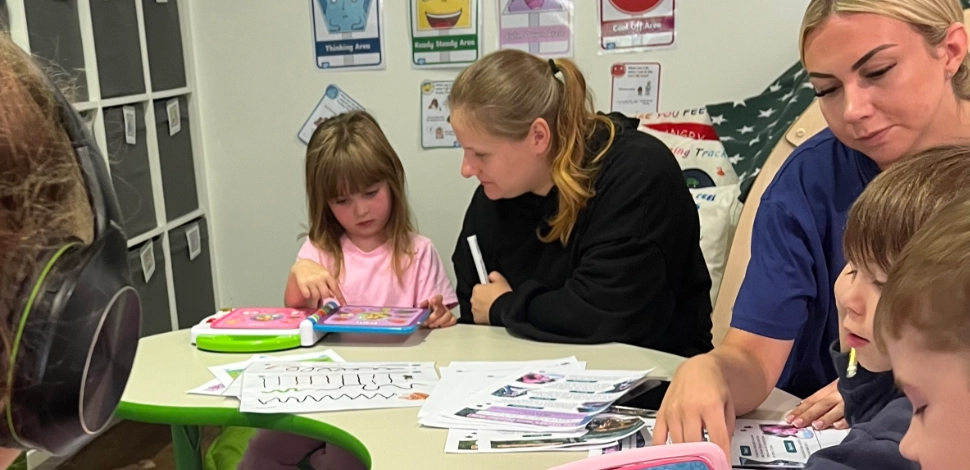
We aim to understand each child’s strengths
For more about how we understand behaviour and adapt support, see Positive Behaviour Strategies for Autistic Children at Home. Our De-escalation Strategies for Challenging Behaviour in Autistic Children article focuses specifically on supporting distress safely, rather than funding pathways.
How can ABA Pathways help?
ABA Pathways provides individualised specialist support, including respite and alternative provision. We can discuss whether our service may be suitable for a child, the support that would be needed and the information a school or local authority may require when considering a referral.
If you are unsure where to start, tell us whether you are looking for respite or education support, where your child lives and whether you are already speaking with a school, social worker or SEND caseworker. We can help clarify the type of provision we offer, while the relevant commissioner confirms eligibility and funding.
The aim is not simply to secure a funded place. It is to make sure the support arranged genuinely meets the child’s needs and improves their opportunities, autonomy and quality of life.